When it comes to quirky creatures, few can rival the axolotl. With its adorable smile and feathery gills, this aquatic wonder has captured hearts worldwide. But here’s the million-dollar question: is an axolotl a salamander? Spoiler alert—it’s not just a cute face; it’s also a fascinating member of the salamander family.
Overview of Axolotls
Axolotls display captivating features, including a broad smile and vibrant, feathery gills. They belong to the Ambystoma genus, classifying them firmly as salamanders. Unique among amphibians, axolotls retain larval traits throughout their lives, a phenomenon known as neoteny. This aquatic lifestyle sets them apart from many other salamanders that transition to terrestrial habitats.
Breeding occurs primarily in the spring, during which axolotls exhibit fascinating behavioral patterns. Although they can reproduce year-round in captivity, seasonal cues play a crucial role in wild populations. Hatchlings are tiny, measuring around 1 centimeter at birth, quickly growing to 15-30 centimeters as they mature.
Remarkably, axolotls demonstrate an extraordinary ability to regenerate lost body parts. Limb regrowth occurs within weeks, showcasing their regenerative capabilities. Studies suggest this ability could offer insights into medical advancements for humans.
Diet consists mainly of worms, small fish, and insect larvae. Feeding habits contribute to their unique ecological role in aquatic environments. Habitat destruction and pollution threaten their survival, particularly in their native lakes around Mexico City.
Conservation efforts are essential to protect this enchanting species from extinction. Axolotls face an alarming decline in numbers, with various initiatives underway to safeguard their future. Adventure awaits those who wish to observe these intriguing creatures as they capture the hearts of many with their charm.
Characteristics of Salamanders
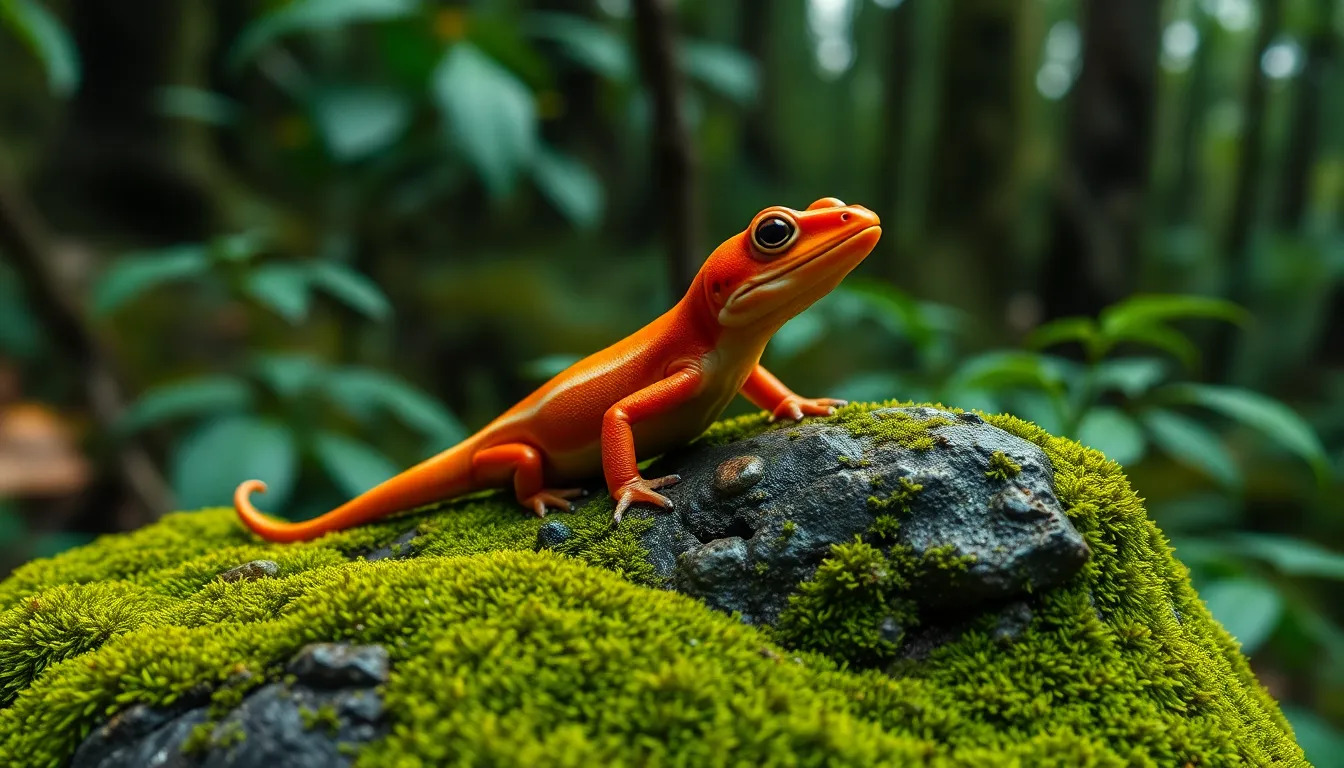
Salamanders display a range of characteristics that distinguish them within the amphibian group. These creatures exhibit soft, moist skin that often appears in vibrant colors, helping them blend into their environments.
Physical Features
Salamanders typically have elongated bodies with four limbs. Their size can vary significantly, ranging from a few centimeters to over a meter in length. Many possess a tail that aids in swimming, while some species retain external gills in their aquatic forms, similar to axolotls. Color patterns often include spots or stripes, enabling camouflage. Skin texture varies; some species have smooth skin, while others exhibit bumps or ridges.
Behavioral Traits
Salamanders display unique behavioral traits. Most prefer moist environments, which provide essential hydration. They often lead a primarily nocturnal lifestyle, emerging at night to hunt for small invertebrates. Communication occurs through visual and chemical signals, with some species performing elaborate displays during mating. Many exhibit territoriality, particularly during breeding seasons when males compete for female attention. Their fascinating behaviors reflect the adaptability and diversity within the salamander family.
Taxonomy of Axolotls
The axolotl belongs to the class Amphibia and the order Urodela, specifically within the Ambystoma genus. This classification places axolotls firmly among salamanders, establishing them as an integral part of their family. They exhibit notable traits, such as neoteny, which allows retention of juvenile characteristics throughout adulthood.
Classification
Axolotls fall under the family Ambystomatidae. This family includes various species of mole salamanders. The distinct characteristics of axolotls, along with their unique life cycle, separate them within this family. We see them classified scientifically as Ambystoma mexicanum, highlighting their unique ecological niche. Other members of the Ambystoma genus, like the tiger salamander, undergo metamorphosis, unlike axolotls.
Genetic Relationship to Salamanders
The genetic makeup of axolotls reveals their close ties to other salamanders. They share approximately 90% of their DNA with the tiger salamander. Such similarities demonstrate the shared ancestry between these creatures, linking them to the broader genera of salamanders. Researchers study these relationships to understand better evolutionary pathways and adaptations within amphibians. Notably, axolotls exhibit exceptional regenerative abilities, which provide insights into their genetic divergence and evolutionary significance compared to other salamanders.
Habitat and Distribution
Axolotls primarily inhabit the lake systems of Xochimilco and Chalco in Mexico City. These unique aquatic environments consist of canals, ponds, and lakes, offering essential resources for survival. Freshwater ecosystems support their lifestyle, allowing axolotls to thrive while retaining their larval characteristics.
Wetland areas provide ideal breeding grounds during the spring months. The spring season triggers increased reproductive activity, where adults lay eggs that hatch into small larvae. Once hatched, these larvae require specific water conditions to grow and mature.
Natural habitats face significant risks from urbanization and pollution. Habitat destruction reduces their living space, affecting population numbers and diversity. Pollutants in the water contribute to declining health and reproductive issues in axolotls, threatening their continued existence.
Conservation efforts focus on preserving their native habitats to support their survival. Protected areas and restoration projects aim to mitigate the impact of human activities. Breeding programs also contribute to maintaining their population numbers, providing hope for the future of axolotls.
International attention highlights the importance of safeguarding these captivating creatures. Organizations dedicated to amphibian preservation champion awareness and research. Increased knowledge about axolotls enhances understanding of their ecological role and the need for habitat conservation.
These efforts collectively reinforce the significance of habitat for sustaining axolotls and ensuring their survival in a rapidly changing environment. By prioritizing conservation, society can help protect this extraordinary member of the salamander family from extinction.
Conservation Status
Axolotls face critical threats to their population, primarily due to habitat destruction and pollution. Their native lakes, including Xochimilco and Chalco in Mexico City, have severely declined in size and quality. Urbanization and agricultural runoff significantly degrade these vital ecosystems.
The International Union for Conservation of Nature (IUCN) recognizes axolotls as critically endangered. Habitat loss decreases not only their numbers but also genetic diversity, making recovery challenging. Conservationists highlight the urgent need for effective preservation measures to mitigate these threats.
Restoration projects aim to rehabilitate axolotl habitats through initiatives that address pollution and improve water quality. Breeding programs in captivity support population numbers and genetic health. These initiatives also serve as education platforms for the public about the importance of amphibian conservation.
The Mexican government has taken steps to protect axolotls by designating protected areas within their natural habitats. Strengthening these environmental protections enhances the chances of sustaining axolotl populations for future generations. Community involvement plays a crucial role as awareness grows around the ecological importance of these salamanders.
Collaborative efforts among researchers, NGOs, and government agencies emphasize conservation strategies. Raising awareness through campaigns educates the public on the necessity of action against threats to axolotls. Each initiative offers a glimpse of hope for the survival of this unique aquatic creature.
The axolotl is not just a charming creature but also a remarkable member of the salamander family. Its unique characteristics and fascinating biology make it a subject of interest for both researchers and enthusiasts alike. The ability to regenerate lost body parts sets it apart within the amphibian world, offering potential insights into medical advancements.
However, the challenges it faces in its natural habitat are significant. Urbanization and pollution threaten its existence, highlighting the urgent need for conservation efforts. Protecting the axolotl is crucial not only for preserving this enchanting species but also for maintaining the ecological balance within its native environment. A commitment to conservation can ensure that future generations continue to appreciate the wonders of this extraordinary amphibian.